Deployment architecture

Progress should never come at the cost of control.

Choose where the system runs, who operates it, how it connects, and how its data remains protected. Exact availability is confirmed for each product and operating profile during solution design.

Start with the operating boundary

Start with the boundary, not the technology name

The infrastructure changes. Responsibility stays explicit.

Four answers to one question: where does the system run, and who operates it?

Where do the system and data live?

Who owns the infrastructure, and who operates it?

How do support, updates, and recovery enter?

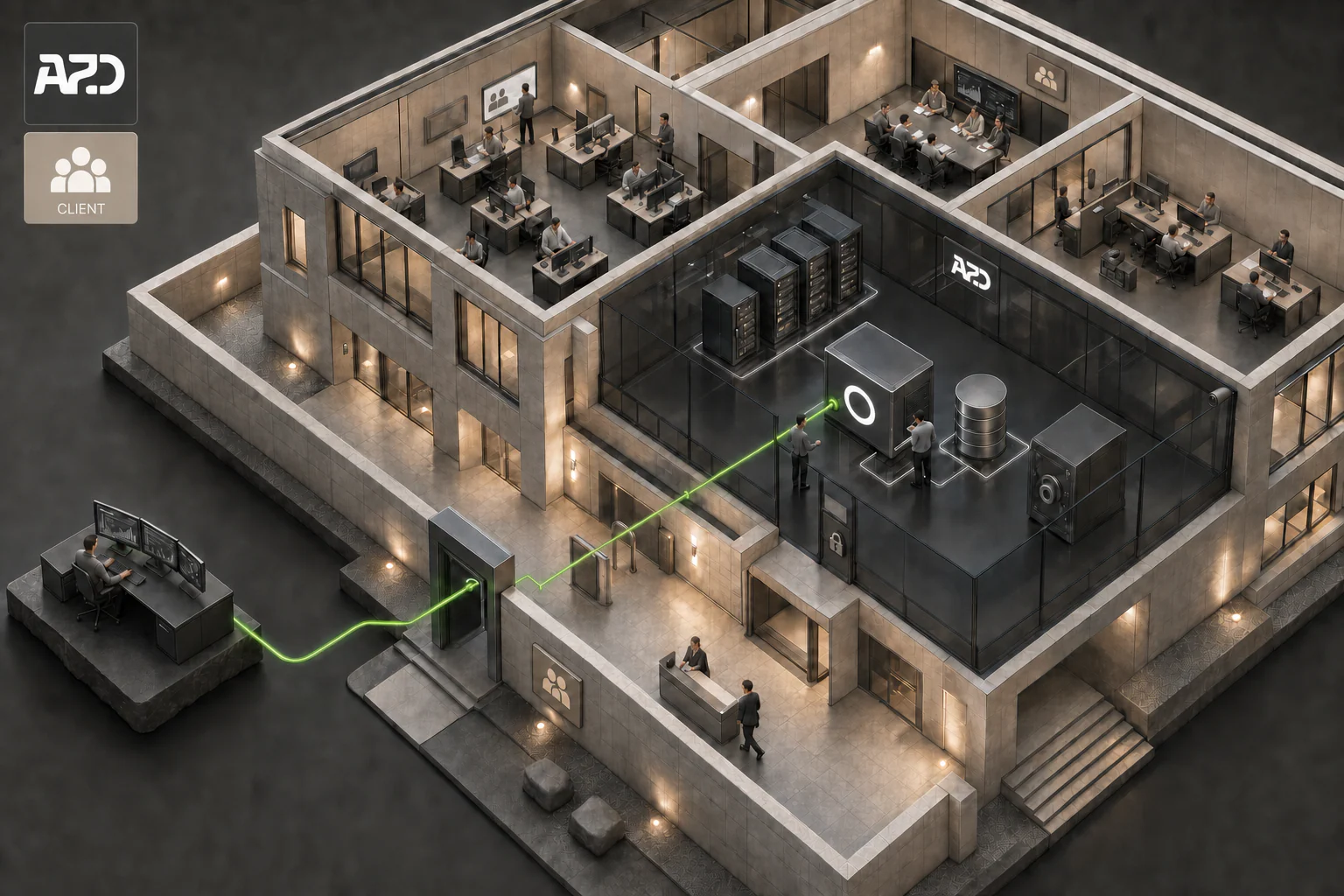
Cloud

We host and operate it. Your team signs in and works.
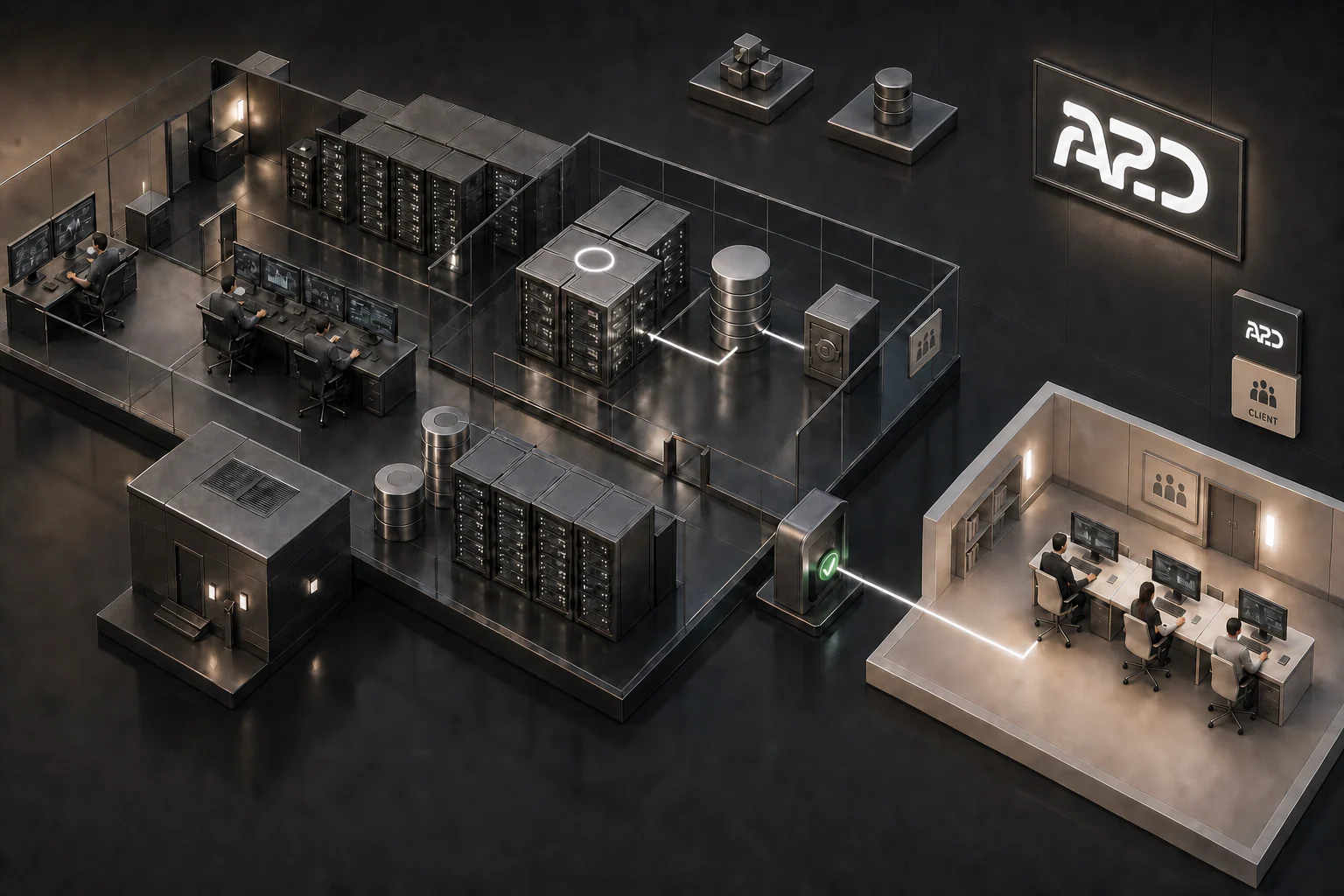
Operational view of the Cloud deployment model

Where it runs

In an isolated service environment hosted and operated by A2ZD.

Who controls the infrastructure

A2ZD controls the hosting environment. Your organization owns its data, identities, and access decisions.

Who operates and supports it

A2ZD engineers deploy, monitor, maintain, back up, and update the agreed service.

Connection required

Internet access is required for your team to sign in.

Why choose it

A fast launch with day-to-day infrastructure operation handled for you.

Updates, backup, and recovery

Monitoring, backup, recovery, and update windows are defined for the selected service profile.

Security boundary

Encrypted connections and storage controls are specified and verified for that profile.
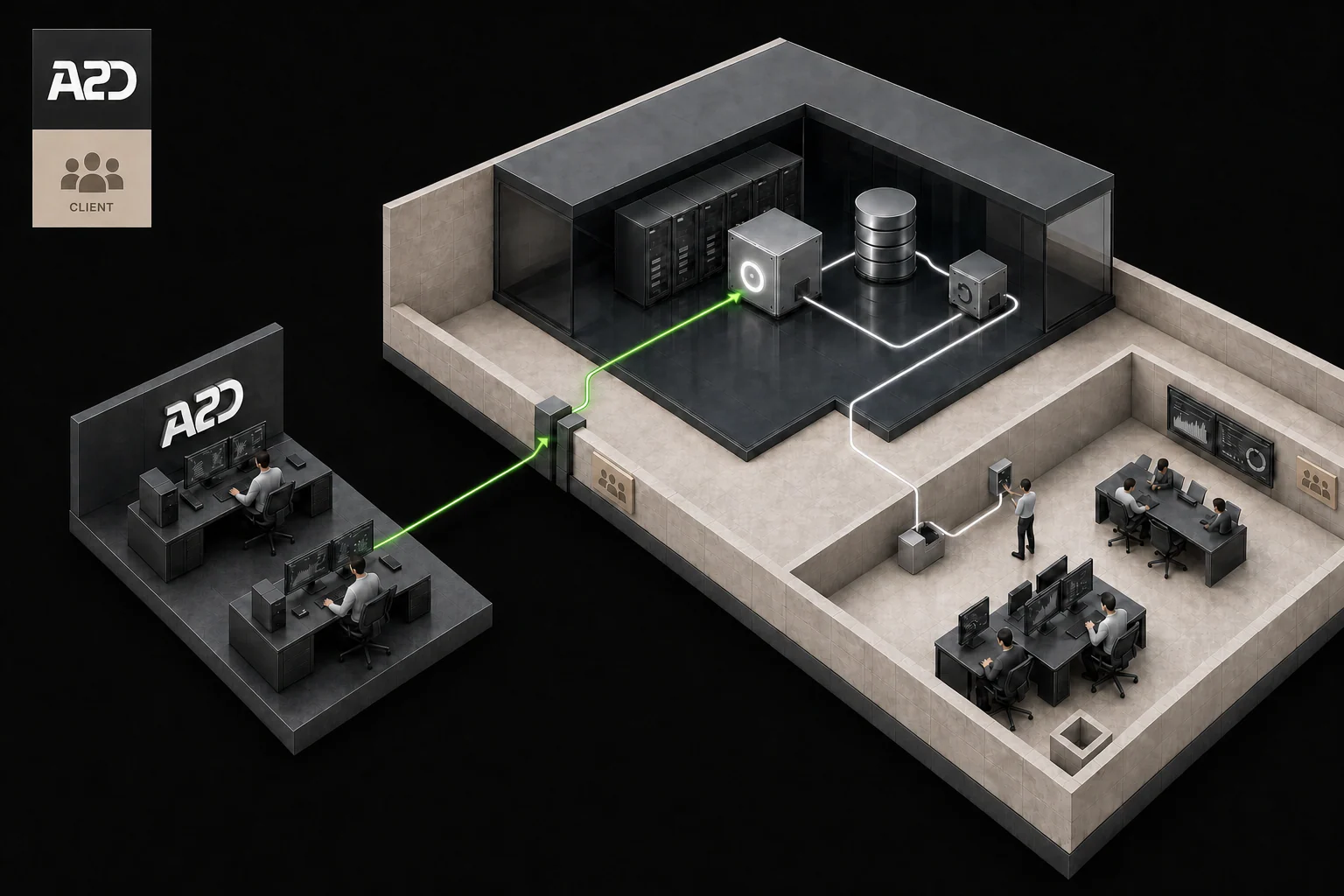
Remote-managed

It runs in your cloud or VPS. A2ZD manages it through a controlled support path.

Operational view of the Remote-managed deployment model

Where it runs

Inside infrastructure your organization controls: your cloud account, private cloud, or VPS.

Who controls the infrastructure

Your organization owns or controls the infrastructure and its data boundary.

Who operates and supports it

A2ZD operates and supports the agreed components through a narrow, auditable management path.

Connection required

A controlled internet or private-network path is available when managed support is required.

Why choose it

Organizations that want infrastructure ownership with an experienced operating team.

Updates, backup, and recovery

Backup, recovery, monitoring, and update responsibilities are divided explicitly between your team and A2ZD.

Security boundary

The support route, credentials, permissions, and audit evidence are limited to the agreed operating boundary.

On-premises

The system and data run inside infrastructure your organization controls.

Operational view of the On-premises deployment model

Where it runs

Inside your organization, data center, or controlled local network.

Who controls the infrastructure

Your organization owns and controls the servers, storage, identity, network, and data.

Who operates and supports it

Your team operates it, or A2ZD engineers work on-site and, when approved, through an optional controlled remote-support gate.

Connection required

Core operation can be designed without an internet dependency when the product profile supports it.

Why choose it

Local data residency, internal identity integration, or direct infrastructure control.

Updates, backup, and recovery

Local backup, recovery, monitoring, and update procedures become part of the operating design.

Security boundary

System access follows the organization’s local network, identity, permission, and logging controls.

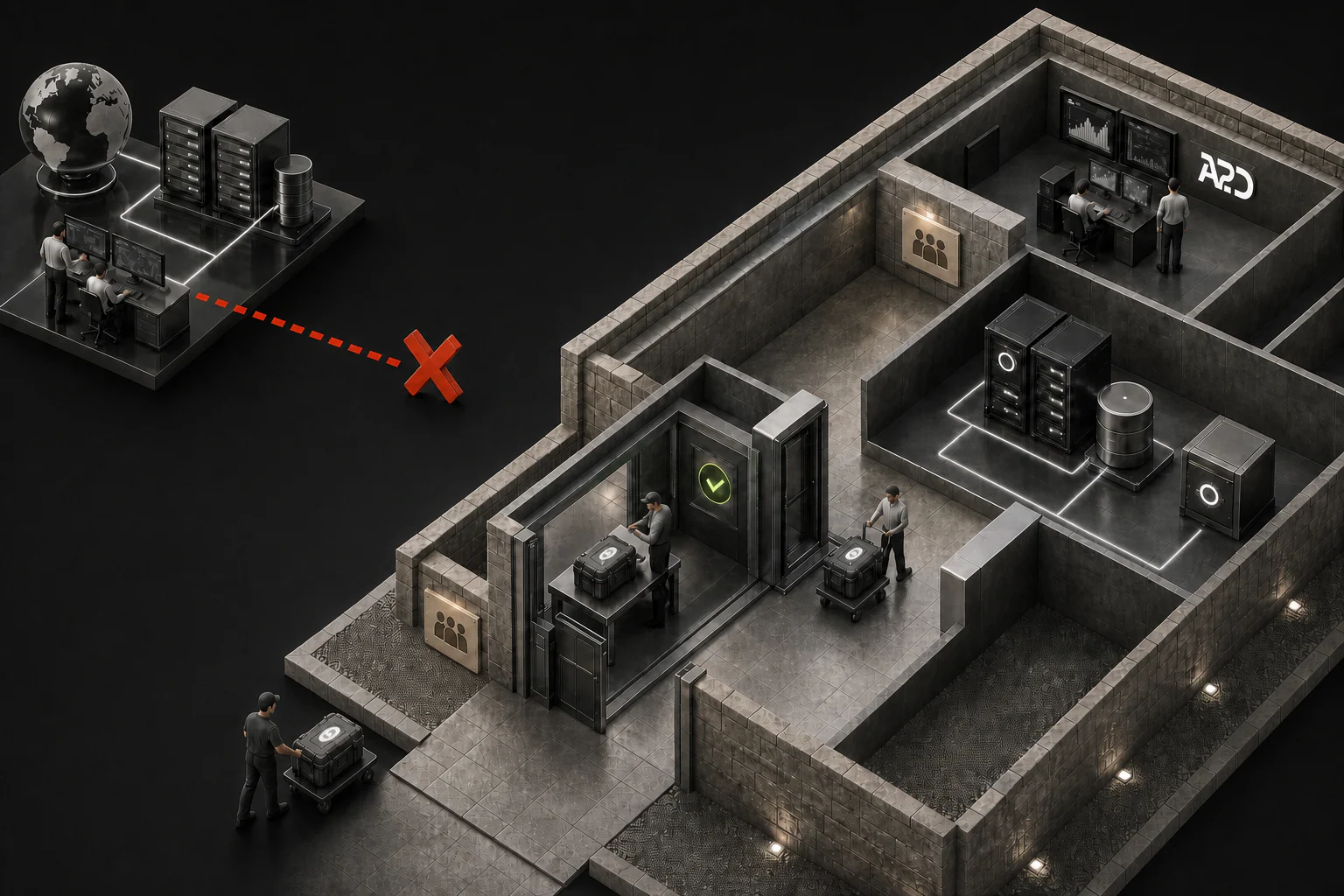
Air-gapped

No internet and no automated external connection. Updates enter through an approved offline process.

Operational view of the Air-gapped deployment model

Where it runs

Inside a physically and logically separated facility or network.

Who controls the infrastructure

Your organization controls the isolated infrastructure, local identities, media, and data.

Who operates and supports it

Local operators and approved A2ZD engineers work inside the isolated boundary. Support and releases follow offline procedures.

Connection required

No internet and no automated external synchronization or management channel.

Why choose it

Qualified high-sensitivity environments where deliberate separation is a requirement.

Updates, backup, and recovery

Verified release packages cross a human approval gate; backup and recovery remain inside the isolated boundary.

Security boundary

Separation is physical and logical. Every allowed transfer is deliberate, recorded, and controlled.

The boundary is only the beginning

Security

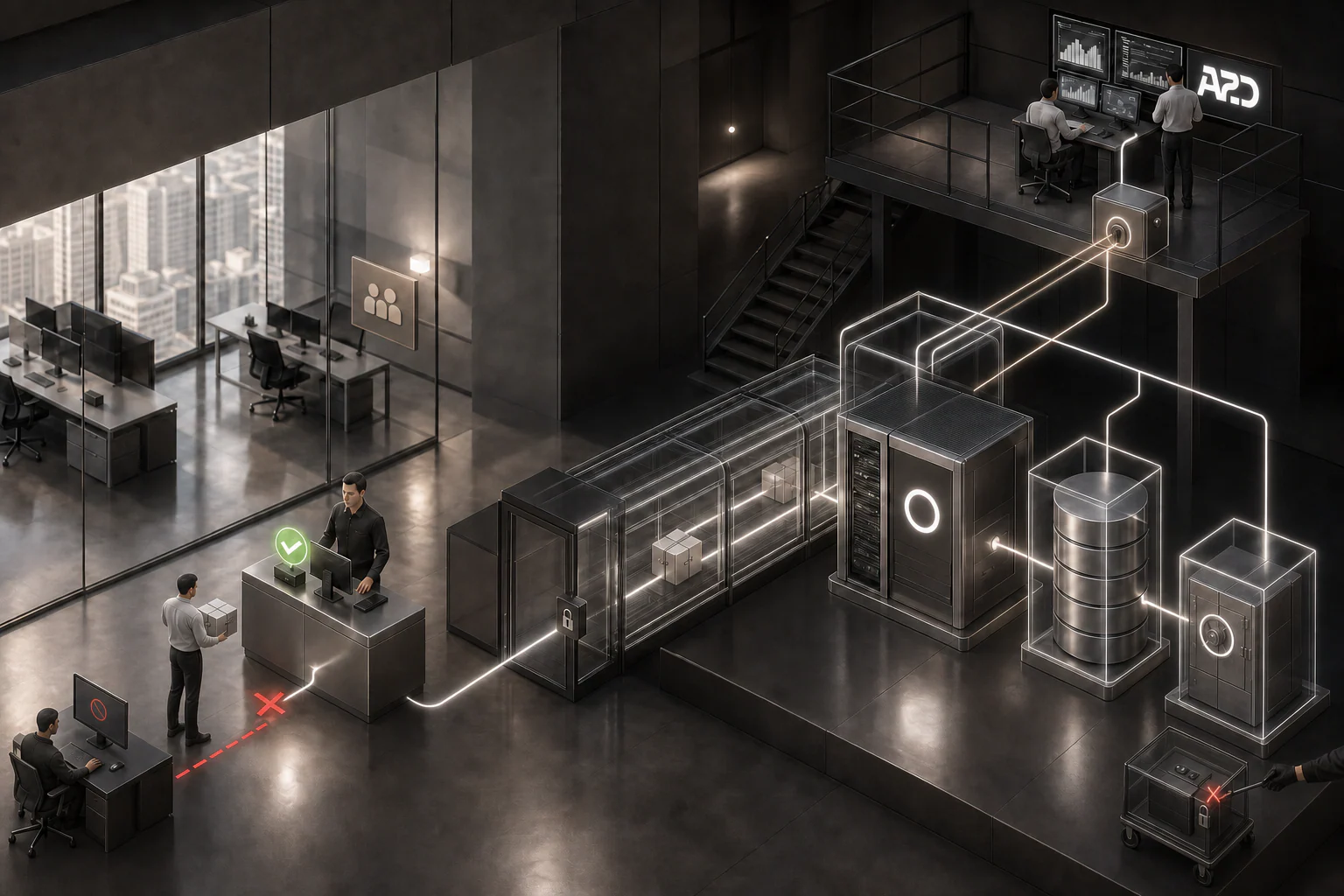
Protected from disk to connection.

The objective is simple: a stolen medium, copied disk, or intercepted connection should not make the data readable. Encryption, identity, keys, backups, and recovery are therefore specified, implemented, and verified for each product and deployment profile.
Operational view of protected data in transit and at rest, with unauthorized access blocked

Encrypted disks and storage

Storage volumes and media controls are selected for the deployment profile.

Protected data, files, and backups

Application records, files, backup copies, and recovery paths stay inside the defined boundary.

Encrypted network paths

TLS or mTLS is applied where the product architecture and connection model require it.

Identity, keys, permissions, and evidence

Access, key custody, audit records, and recovery authority are assigned and verified.

Scale is an architecture decision, not a marketing number

Scalability

Sized for today. Designed for the next stage.

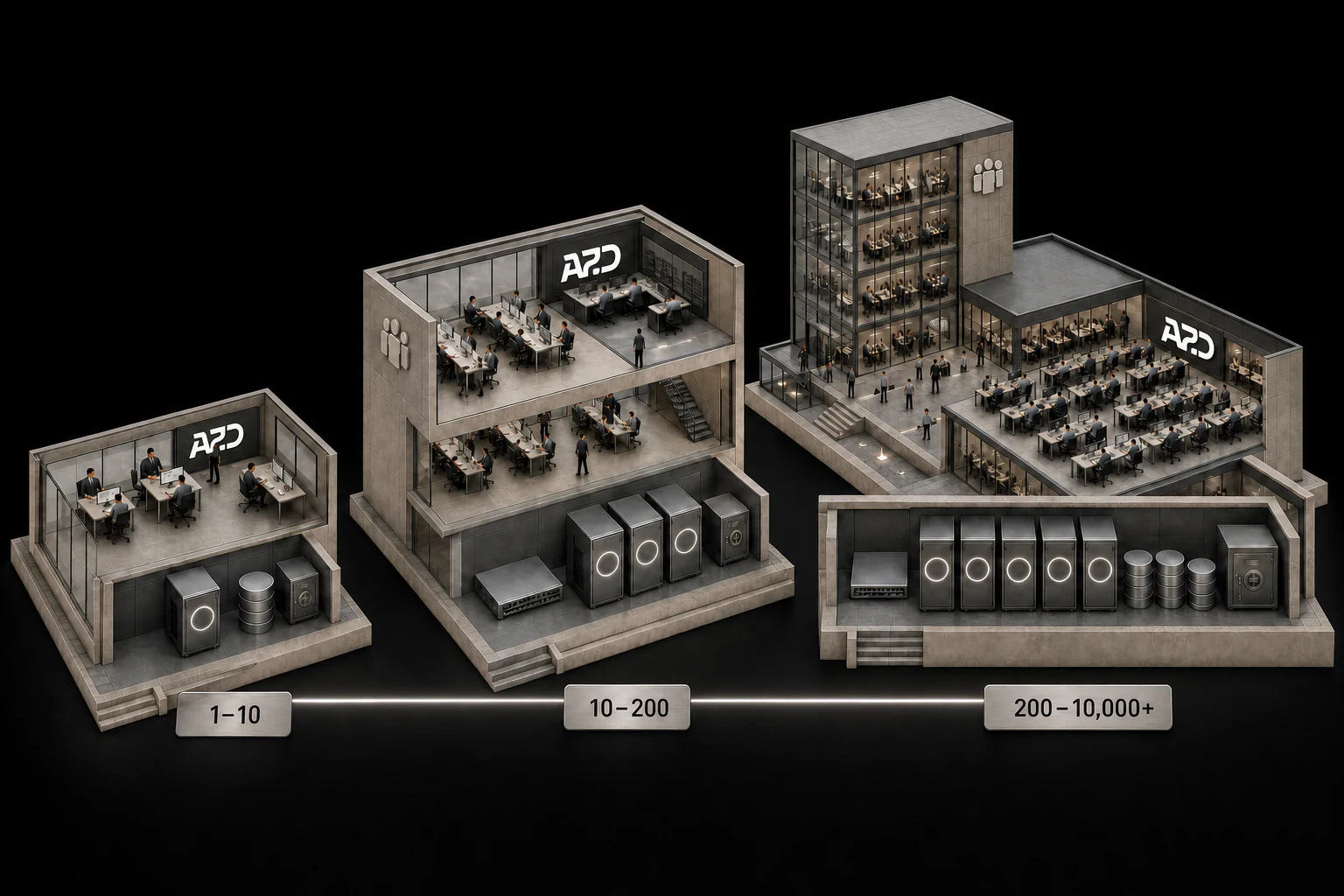
Sizing begins with users, locations, concurrency, data volume, processing rate, and recovery requirements. We then choose scale-up or scale-out for the system and environment; automatic scaling is not assumed to fit every deployment.
Operational view of growth from 1–10 users, to 10–200, to 200–10,000+ users

Small office · 1–10 users

One right-sized deployment for the people, data, and work that exist today.

Growing organization · 10–200 users

Processing, storage, and worker capacity separate as locations, concurrency, or volume increase.

Large organization · 200–10,000+ users

Replicated services, load distribution, monitoring, resilience, and recovery architecture are designed around measured demand.

Deployment is part of solution design, not a choice added afterward.

Discuss your deployment

We map data boundaries, ownership, operating responsibility, connectivity, and recovery before recommending a model.Discuss your deployment